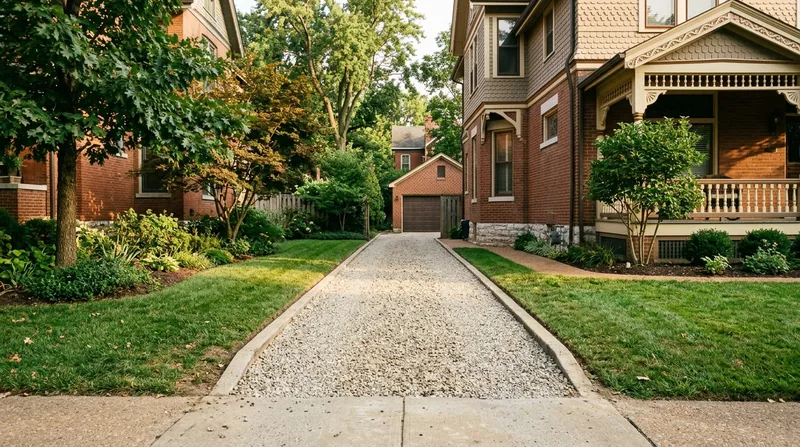




Tar and chip driveways in St. Louis give older homes on narrow lots a textured, permeable surface that flexes with the clay soil beneath. We spray hot asphalt binder, embed stone chips, and roll it flush, creating a finish that moves easier with seasonal ground shift than a rigid slab and costs less than full-depth paving. This surface works especially well for gingerbread-era houses in the dense city grid and for properties where drainage matters, from Clayton to Kirkwood to the newer suburban rings west through St. Charles County. The continental freeze-thaw cycle and wet springs that crack standard asphalt can be kinder to tar and chip, since the material has more give. If your driveway is sound underneath but you want texture, color, and a budget-friendly refresh, tar and chip is worth considering.
Why Tar and Chip Works for St. Louis Homes and Narrow Lots
St. Louis sits on expansive clay and loess that swells when wet and shrinks when dry, moving whatever sits on top of it through every season. Standard asphalt, poured rigid and thick, cracks under that movement. Tar and chip is more forgiving because it flexes slightly with ground shift and because water drains through it faster than sealed asphalt, reducing the saturation that makes clay swell in the first place. For the tight rear drives common in the old city grid, where space is measured in feet and trees hang over the edges, tar and chip also avoids the cost and mess of full-depth removal and base work.
- We apply a hot asphalt binder to a compacted aggregate base, then embed stone chips while the binder is still fluid.
- Rolling and curing lock the chips in place, creating a textured surface that looks rustic and drains faster than smooth asphalt.
- The material tolerates minor ground movement better than rigid surfaces because the chips can shift slightly without cracking the whole drive.
- Tar and chip costs less than full asphalt paving because we skip the hot-mix batching and use a simpler application process.
- The surface is durable for 5 to 7 years with normal use in the St. Louis climate, after which it can be recoated or upgraded to asphalt.
This approach is especially smart for heritage properties and narrow lots where traditional paving feels out of scale or too expensive to justify.
Local example: A gingerbread house in the Shaw neighborhood with a 12-foot rear drive backing to a garage at the property line can fit a tar and chip surface where a full asphalt tear-out would disrupt the lot. The material's texture complements older architecture and costs a fraction of a replacement.
For more information on how tar and chip compares to other driveway options, see our guide to asphalt driveway paving and installation.
How We Install Tar and Chip Driveways in St. Louis
Installation starts with site inspection to confirm the existing base is sound and drains properly. We measure the drive, clear debris, and assess whether the subgrade needs grading or compaction. If the base is already solid, we move straight to application. If the drive has settled or soft spots, we grade and compact first, then lay a fresh aggregate base. The process is faster than full asphalt paving because we skip the hot-mix truck and heating plant.
- We inspect the existing base and grade the drive level, compacting the subgrade and adding new aggregate if needed.
- We heat the asphalt binder and spray it evenly across the compacted base in a controlled pattern.
- We immediately distribute the stone chips into the wet binder, ensuring full coverage and consistent depth.
- We roll the surface with a heavy roller to press the chips into the binder and lock them in place.
- We allow 24 to 48 hours for curing before you drive on the surface, depending on temperature and humidity.
The entire job typically takes one to two days for a standard residential drive, weather permitting.
Real example: A drive in Webster Groves that was settling unevenly needed grading and a new base layer before tar and chip could be applied. We spent half a day on grading, then applied the binder and chips the next morning. The homeowner had a finished drive by afternoon, for less money than an asphalt overlay would have cost.
If you need a full assessment of your drive's condition, contact us for a free estimate and we will inspect the base in person.
Tar and Chip Methods and Options
| Approach | Description | Best for |
|---|---|---|
| Tar and Chip on Existing Base | Hot asphalt binder and stone chips applied directly to a sound, compacted base with no removal or grading. | Drives with stable subgrades and good drainage; budget-conscious refresh projects. |
| Tar and Chip with Base Prep | Grading, compaction, and new aggregate base laid before binder and chips are applied. | Drives with settling, soft spots, or poor drainage; clay soil that shifts seasonally. |
| Tar and Chip Recoat | A fresh layer of binder and chips applied over an existing tar and chip surface that is still structurally sound. | Maintaining an older tar and chip drive; refreshing color and texture without full replacement. |
| Tar and Chip with Recycled Asphalt | Stone chips are sourced from recycled asphalt millings, reducing material cost and supporting reclamation. | Budget projects and environmentally conscious owners; rural and suburban properties. |
Tar and Chip Driveways Cost in St. Louis: What to Expect
Tar and chip driveways in St. Louis start at around $5 per square foot for a straightforward application on an existing, sound base. A typical residential drive of 400 to 600 square feet runs $2,000 to $3,000 before any grading or base work. If the subgrade needs grading, compaction, or new aggregate, add $500 to $1,500 depending on the extent of the work and the condition of the clay underneath. The cost is lower than full asphalt paving because the material is simpler to apply and requires no hot-mix plant, but it is higher than recycled millings and lower than new hot-mix asphalt.
The biggest variables are whether your base is already sound, whether the drive needs grading to correct settling, and how much new aggregate has to be brought in. A tight rear drive in an older neighborhood may cost less than a wide suburban driveway because there is less square footage to cover. A drive on clay that has shifted or settled will cost more because base prep takes longer. Getting two or three written estimates with tonnage and thickness specs is essential, because cost can swing widely depending on what the contractor finds on site.
For a detailed pricing overview and to discuss your specific drive, visit our pricing page or call (314) 916-3751 for a free, no-obligation estimate.
Tar and Chip Driveways Near Me: What St. Louis Homeowners Should Know When Hiring
Tar and chip is a simple process, but quality depends on the base, the binder temperature, and the rolling technique. When you call a contractor, ask whether they will inspect the base in person and provide a written estimate with base-prep details, chip size, and tonnage per square foot. Many discount tar and chip offers skip base inspection or apply binder and chips over a weak subgrade, which fails within a year. Verify that any contractor you hire carries full insurance and has local references you can contact.
In St. Louis, driveway permits are required in some municipalities and not others. The City of St. Louis, Clayton, Webster Groves, and Kirkwood each have their own rules. If your property is in an HOA or historic district, check the architectural guidelines before you start, because some communities restrict driveway material or color. Missouri law requires a utility locate from 811 before any excavation, so if grading is needed, we call 811 to mark utilities before we begin. Always verify permit requirements with your local building department before work starts.
- Ask the contractor to inspect the base on site and provide a written estimate that specifies chip size, binder type, and tonnage per square foot.
- Request at least two references from similar drives installed in the past two years, and call them to ask about durability and appearance.
- Confirm that the contractor carries general liability insurance and ask for a certificate of insurance before signing a contract.
- Check your local building department and HOA rules for permit requirements and material restrictions before scheduling work.
- Get everything in writing, including start date, completion date, payment terms, and what happens if the surface fails prematurely.
- Avoid any contractor who shows up unsolicited, quotes a price by phone without visiting, asks for a large cash deposit, or has out-of-state plates.
We are fully insured and have been in business since 2013 serving St. Louis and surrounding areas. Contact us to schedule a free estimate and we will walk you through the process and answer any questions about your specific property.
Tar & Chip Driveways in St. Louis: Pricing Guide
| Service | Price | Details |
|---|---|---|
| Tar and Chip on Sound Base | Starting at $5/sq ft | Hot asphalt binder and stone chips applied to existing compacted base, no grading or base replacement needed |
| Tar and Chip with Base Prep | Starting at $7/sq ft | Includes grading, compaction, new aggregate base, binder, and chips for drives with settling or poor drainage |
| Tar and Chip Recoat | Starting at $3.50/sq ft | Fresh binder and chips over existing tar and chip surface that is structurally sound, maintains color and texture |
| Complex or Large-Scale Job | On estimate | Extensive grading, utilities, access challenges, or multiple problem areas require on-site inspection and written quote |
| Travel | Included | No separate call-out fee or mileage charge within St. Louis and surrounding service areas |
| Estimate | Free | Written estimate with base details, tonnage specs, and timeline, response within 24 hours at (314) 916-3751 |
Indicative pricing, the exact cost depends on square footage, finish, and site access. Free personalized estimate within 24h at (314) 916-3751.


