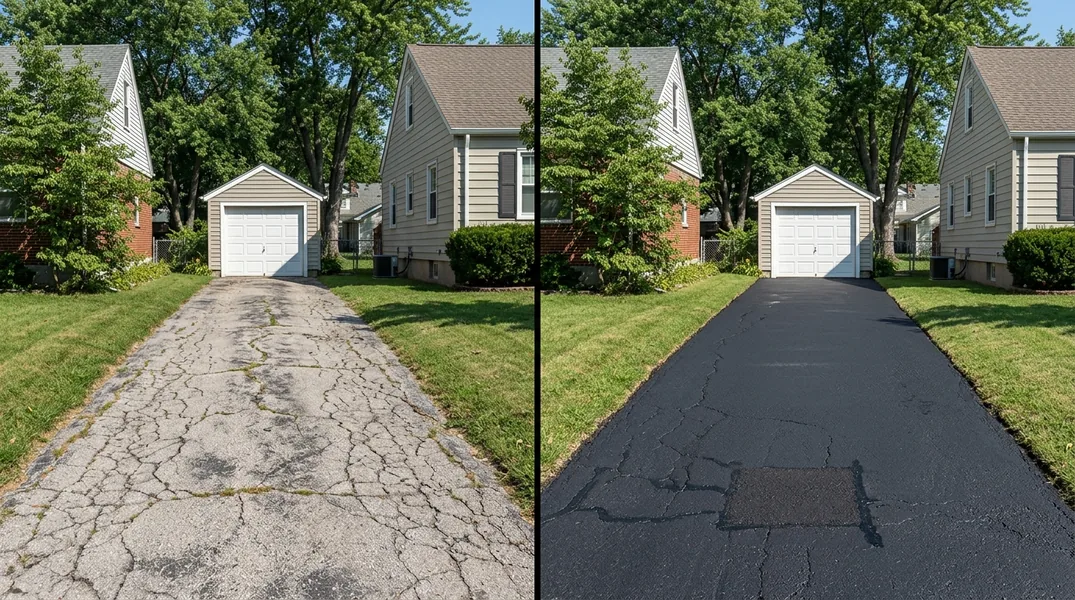
Understanding Asphalt Crack Types
Not all cracks in your driveway are created equal. The type, size, and pattern of cracks tell a story about what's happening beneath the surface and whether you need Driveway Repair or a complete replacement. Learning to read these signs helps you make informed decisions about your property's maintenance.
Hairline cracks are the smallest and most common type. These thin, barely visible fractures often appear during the first few years after installation and are typically caused by natural settling or minor temperature fluctuations. While they may look concerning, hairline cracks are usually cosmetic and don't require immediate action. However, they can allow water to seep into the asphalt layers below, so monitoring them is important.
Alligator cracking (also called crazing) looks like a spider web or the skin of an alligator across your driveway surface. This pattern indicates that the base layer of your asphalt is failing, often due to poor drainage, heavy traffic, or aging. When you see alligator cracks, the structural integrity of your driveway is compromised, and repair alone may not be sufficient. This is typically a sign that Asphalt Resurfacing and Overlay or full replacement should be considered.
Linear or transverse cracks run in straight lines across your driveway, usually perpendicular to the direction of traffic. These cracks often develop as asphalt ages and becomes brittle, especially in the St. Louis climate where temperature swings between seasons stress the material. Linear cracks can be sealed to prevent water infiltration, but if they're numerous or widening, they signal that your asphalt is reaching the end of its serviceable life.
How Long for Asphalt to Cure After Installation
One of the most common questions homeowners ask after having Asphalt Driveway Paving and Installation work completed is about curing time. Understanding the curing process is essential for protecting your investment and ensuring your new driveway reaches its full strength and durability.
Asphalt begins to harden almost immediately after installation, but full curing takes time. In ideal conditions, asphalt typically reaches about 85 to 90 percent of its final strength within 24 to 48 hours. However, complete curing can take 6 to 12 months, depending on weather conditions, asphalt mix design, and traffic load. During the first few weeks, your driveway continues to cure as the binder (the sticky component that holds aggregate together) oxidizes and hardens.
Temperature plays a critical role in curing speed. Warm weather accelerates the curing process, while cool, damp conditions slow it down significantly. In St. Louis, where winters can be cold and wet, newly paved driveways installed in fall or winter may cure more slowly than those installed in summer. This is why timing your paving project can make a difference in how quickly your driveway becomes fully functional.
The asphalt mixture itself also affects curing time. Different mixes contain varying amounts of binder and aggregate, and some are formulated to cure faster than others. A professional paving contractor will select the appropriate mix for your climate and intended use, ensuring optimal curing performance for your specific situation.
How Long Before You Can Drive on New Asphalt
While asphalt begins curing immediately, the timeline for when you can safely drive on your new driveway is shorter than full curing. Most new asphalt driveways can support light traffic within 24 to 48 hours after installation, though this depends on weather and temperature conditions. However, waiting longer is always safer and extends the life of your investment.
During the first 24 hours, keep all vehicles off the freshly paved surface. The asphalt is still soft and can be damaged by tire marks, indentations, or displacement. Even light traffic during this critical window can compromise the surface and create weak spots that lead to premature cracking or rutting. If you must use your driveway, wait at least 48 hours before driving on it, and even then, drive slowly and avoid sharp turns or sudden stops.
For the first week after installation, continue to drive cautiously on your new asphalt. Avoid parking in the same spot repeatedly, as concentrated weight can cause impressions in the still-curing surface. Don't allow heavy trucks or equipment on the driveway during this period. If you have guests or service vehicles, ask them to park on the street temporarily. These precautions during the critical early curing period significantly impact the long-term durability of your driveway.
Temperature matters too. If your driveway was paved during cool weather, curing will progress more slowly, and you should extend your waiting period before driving on it. Conversely, hot weather accelerates curing, and you may be able to resume normal driving sooner. Your paving contractor will provide specific guidance based on the conditions when your work was completed.
New Asphalt Driveway Care and Maintenance
Proper care during the first year of your new asphalt driveway's life sets the foundation for decades of reliable performance. New asphalt driveway care begins immediately after installation and continues through the seasons as your pavement matures and fully cures.
During the first month, avoid using harsh chemicals, excessive water, or pressure washing on your new surface. Some contractors recommend waiting 30 days before any aggressive cleaning. When you do clean your driveway, use a gentle approach with a soft-bristled broom or low-pressure water spray. Avoid de-icing salts during winter if possible, as these can accelerate deterioration and should not be used on brand-new asphalt. If ice control is necessary, use sand or kitty litter for traction instead.
Protect your new asphalt from stains and spills. Oil, gasoline, and other petroleum products can soften the asphalt binder and cause premature failure. Wipe up spills immediately and consider placing cardboard under parked vehicles to catch drips. This is especially important during the first year when the asphalt is still curing and more susceptible to chemical damage.
One of the most important aspects of new asphalt driveway care is planning for sealcoating. Most professionals recommend waiting 6 to 12 months after installation before applying a seal coat. This allows the asphalt to fully cure and any remaining volatiles to escape. A quality seal coat protects your asphalt from UV rays, water penetration, and oxidation, significantly extending its lifespan. After this initial seal coat, plan to reapply every 2 to 3 years as part of your ongoing maintenance routine.
How Often to Seal Driveway for Maximum Lifespan
Sealcoating is one of the most cost-effective investments you can make in your driveway's longevity. Understanding how often to seal driveway surfaces ensures your asphalt remains protected and extends its usable life by years. Regular sealcoating can double the life of your asphalt, turning it from a 15-year investment into a 25 to 30-year asset.
After your initial seal coat application (which should occur 6 to 12 months after new installation), plan to reseal every 2 to 3 years. This timeline works well for most residential driveways in St. Louis that experience typical weather and traffic. However, your specific schedule may vary based on several factors. If your driveway receives heavy use, experiences extreme weather, or sits in direct sunlight, you may need to seal it more frequently, every 18 to 24 months. Conversely, if your driveway is lightly used and well-shaded, you might extend the interval to 3 to 4 years.
Climate significantly impacts sealcoating frequency. St. Louis experiences freeze-thaw cycles during winter months, where moisture penetrates cracks and expands when frozen, causing additional damage. This harsh seasonal cycle means sealcoating becomes even more critical for protecting your investment. UV rays from intense summer sun also degrade asphalt binder, making regular seal coat reapplication essential for maintaining your driveway's appearance and structural integrity.
The best way to determine your ideal sealcoating schedule is to monitor your driveway's condition. If you notice the surface becoming faded or losing its dark color, or if water no longer beads up on the surface, it's time for a new seal coat. Rather than guessing, consider scheduling a professional inspection to assess your driveway's current condition and receive a personalized maintenance recommendation. This proactive approach prevents small problems from becoming expensive repairs.
Repair vs. Replace: Making the Right Decision for Your Driveway
The decision between repairing and replacing your driveway depends on several factors: the extent of damage, the age of the asphalt, the pricing of each option, and your long-term plans for your property. A good rule of thumb is that if repairs will cost more than 50 percent of a full replacement, replacement is usually the better investment.
Minor damage like small cracks, a few potholes, or surface deterioration can often be addressed with targeted repairs like Pothole Repair and Asphalt Patching. These repairs are cost-effective and can extend your driveway's life for several more years. However, if your driveway shows widespread alligator cracking, multiple large potholes, significant rutting, or drainage problems, repair may be a temporary fix that doesn't address the underlying issues. In these cases, replacement or comprehensive resurfacing is more practical.
Age is another important consideration. Most asphalt driveways last 15 to 20 years with proper maintenance. If your driveway is approaching or exceeding this age and shows multiple signs of failure, replacement might be more economical than continuous repairs. A newer driveway with isolated damage is a better candidate for repair. When you're uncertain, a professional assessment can help clarify your options and provide honest guidance about what makes sense for your situation.
Ready to evaluate your driveway's condition? Contact St. Louis Asphalt Paving today at (314) 916-3751 or request a free estimate to discuss repair and replacement options tailored to your driveway's needs.
Looking for a professional asphalt paving contractor in St. Louis? St. Louis Asphalt Paving responds fast for all your asphalt paving needs.
Get a Free Quote