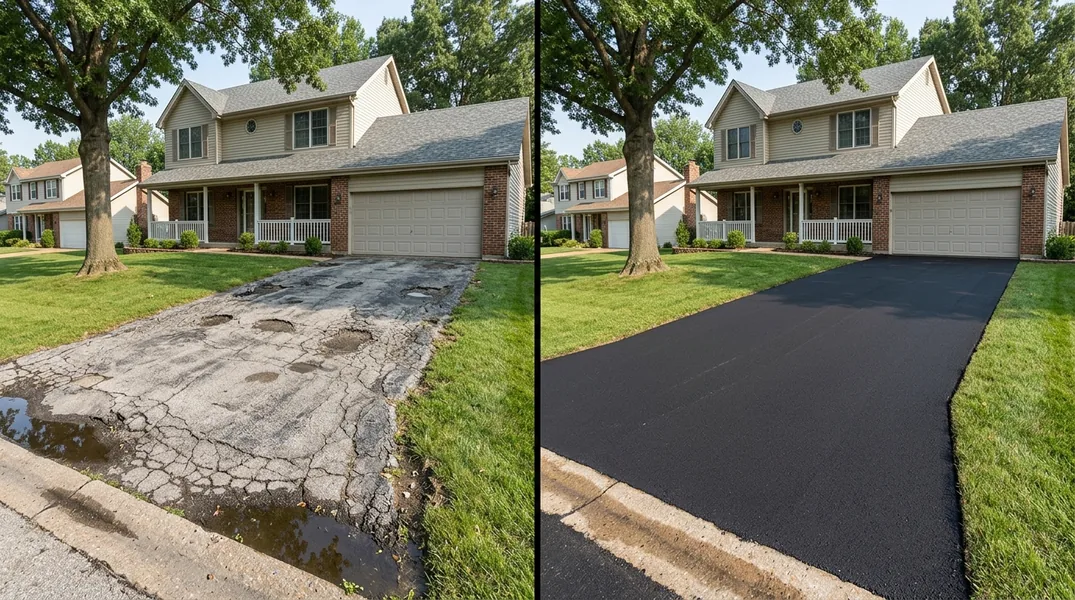
The St. Louis Clay Problem: Why Your Driveway Cracks Differently
If you own a home in St. Louis, you've probably noticed something frustrating: your asphalt driveway develops cracks and potholes even when winter isn't particularly severe. While homeowners in other parts of the country might blame brutal freeze-thaw cycles, the real culprit in St. Louis is far more specific. The region's native clay soil composition creates a perfect storm for asphalt damage that goes beyond typical seasonal wear and tear.
The Greater St. Louis area sits on expansive clay deposits that expand when wet and shrink when dry. This constant movement beneath your driveway creates stress on the asphalt above, even during mild winters when freeze-thaw damage would normally be minimal. Homeowners often assume their driveway problems stem from poor installation or low-quality materials, but the truth is that the soil itself is working against the asphalt from day one. Understanding this local geological reality is the first step toward protecting your investment and knowing when Driveway Repair becomes necessary.
How Expansive Clay Creates Foundation Movement and Driveway Damage
Expansive clay behaves differently than the stable soils found in many other regions. When it absorbs moisture from rainfall, groundwater, or even morning dew, it swells significantly. Conversely, during dry periods, it shrinks and pulls away from whatever sits on top of it. For a driveway, this constant up-and-down movement translates directly into structural stress. The asphalt, which is designed to flex slightly but not to handle sustained vertical movement, begins to develop stress cracks. These aren't the hairline surface cracks you might see on any old driveway; they're often deeper and more widespread because they're driven by soil movement rather than surface weathering alone.
The problem intensifies when water enters these initial cracks. Once moisture gets beneath the asphalt surface, it accelerates the deterioration process. The water softens the base layers and subgrade, which further compromises the driveway's structural integrity. In St. Louis, even a mild winter with occasional freeze-thaw cycles can turn small cracks into significant damage requiring Pothole Repair & Asphalt Patching. The clay's relentless expansion and contraction means that preventive maintenance and timely repairs are not optional extras but essential investments in your driveway's longevity.
Understanding Frost Heave and Its Role in St. Louis Driveway Failure
Frost heave is a phenomenon that occurs when moisture in soil freezes and expands, pushing upward on whatever sits above it. While St. Louis doesn't experience the extreme cold of northern states, it experiences enough freeze-thaw cycles during winter months to trigger frost heave in clay-rich soils. The combination of the region's expansive clay and occasional freezing temperatures creates a particularly damaging scenario. Even a single winter day where temperatures dip below freezing can introduce enough moisture into the soil to cause expansion when it thaws.
What makes frost heave especially problematic in St. Louis is that it's often unpredictable and localized. One section of your driveway might heave while another remains stable, creating uneven surfaces and stress points. These stress points become the starting locations for cracks and eventually potholes. Homeowners sometimes mistake frost heave damage for poor installation, but the reality is that no asphalt driveway can completely prevent this issue when it's driven by soil conditions rather than surface-level problems. This is why understanding whether you need simple repairs or if you should consider whether to repair or replace your driveway is crucial for long-term planning.
Repair or Replace Asphalt Driveway: Making the Right Decision for Your Home
When your driveway starts showing significant damage, one of the biggest questions homeowners face is whether to invest in repairs or replace the entire surface. The answer depends on several factors, including the extent of damage, the age of your driveway, and your long-term plans for your property. If you have isolated potholes or cracks affecting less than 30 percent of your driveway's surface, Pothole Repair & Asphalt Patching or targeted Driveway Repair makes economic sense. However, if your driveway is showing widespread cracking, multiple potholes, or significant settling due to clay movement, replacement or Asphalt Resurfacing & Overlay may be the better investment.
The key is to act before minor damage becomes catastrophic. A crack that's ignored for a season can expand into a pothole within months, especially in St. Louis where clay soil movement and seasonal moisture fluctuations accelerate deterioration. If you're unsure about the best course of action for your specific situation, St. Louis Asphalt Paving can provide a professional assessment. Contact us at (314) 916-3751 or request a free estimate to understand your options and get a clear picture of what your driveway needs.
Preventive Maintenance Strategies for Clay-Heavy Soil Regions
The best defense against clay-related driveway damage is preventive maintenance. Regular seal coating every two to three years helps keep water from penetrating the asphalt surface, which is critical in a region where moisture is constantly being absorbed and released by the underlying soil. Proper drainage around your driveway is equally important. Ensure that water flows away from the edges and doesn't pool on the surface or collect along the sides. Poor drainage accelerates the cycle of moisture absorption and clay expansion, so investing in proper grading or installing drainage solutions can pay dividends over time.
Another important preventive step is addressing cracks as soon as they appear. Small cracks are inexpensive to repair and can prevent the water infiltration that leads to larger problems. Regular inspections, especially after heavy rainfall or winter thaw, help you catch problems early. Additionally, if you're considering a new driveway installation, discuss soil preparation and base layer specifications with your contractor. Proper preparation, including adequate compaction and appropriate base materials, can help mitigate some of the effects of expansive clay. When you're ready to discuss your driveway's needs, whether for preventive measures or necessary repairs, reach out to St. Louis Asphalt Paving at (314) 916-3751.
When to Call a Professional for Driveway Repair Near Me
Recognizing when to call a professional is essential for protecting your driveway investment. If you notice any of the following signs, it's time to contact an experienced asphalt contractor: widening cracks (more than one-quarter inch), multiple potholes, areas where the asphalt is sinking or heaving, or water pooling on the surface. These issues won't resolve themselves and will only worsen with time and seasonal changes. St. Louis Asphalt Paving has extensive experience with the specific challenges that clay-based soil presents to driveways throughout the region, and we understand the nuances of repair decisions in this environment.
Whether you need emergency Pothole Repair & Asphalt Patching, comprehensive Driveway Repair, or a complete replacement with Asphalt Driveway Paving & Installation, we're here to help. Our team can assess your specific situation and recommend the most cost-effective solution for your needs. Don't wait until a small problem becomes a major expense. Call us today at (314) 916-3751 or visit our website to request a free estimate and take the first step toward a durable, well-maintained driveway.
Looking for a professional asphalt paving contractor in St. Louis? St. Louis Asphalt Paving responds fast for all your asphalt paving needs.
Get a Free Quote